Projects
Black Inventors Inquiry Curriculum
The way history remembers Black inventors often falls short by focusing too narrowly on inventions rather than on full human lives. Our initial study examined how four publicly available Inquiry Design Model (IDM) lessons published in 2021–2022 represent Black inventors and whether their design supports meaningful civic inquiry. Using LaGarrett King’s Black Historical Consciousness framework and Rayvon Fouché’s humanizing approach to Black inventors as analytical lenses, we conducted a detailed coding of each IDM’s framing through compelling and supporting questions, source sets, and overall design (paper in preparation). However, our work did not end there. As social studies teacher educators, we are committed not only to analyzing curriculum but also to producing curriculum that educators can use to teach Black history through an inquiry-based approach. Truly honoring Black inventors requires understanding their lives, not just counting their inventions. When we teach and learn about Black inventors, we must show them as complex people shaped by race, gender, sexuality, and history. Our inquiry curriculum aims to engage students in the full lives of Black inventors, not reduce them to their inventions. For complete background information on the curriculum, including its conceptual framing and intended implementation, click here. To view the full peer-reviewed curriculum, click here.
History Matters builds research-based, equity-driven, hyperlocal K-12 curriculum that represents the under-told histories of Fort Collins, Northern Colorado, and Colorado.

In collaboration between historians and educators, History Matters develops classroom-ready lesson plans, resource sets, and multimedia resources. All History Matters curriculum is open-access and freely available. Our goal is to support Colorado teachers in bringing research-based, hyperlocal, culturally responsive content into their classrooms. To learn more about the History Matters project, click here.
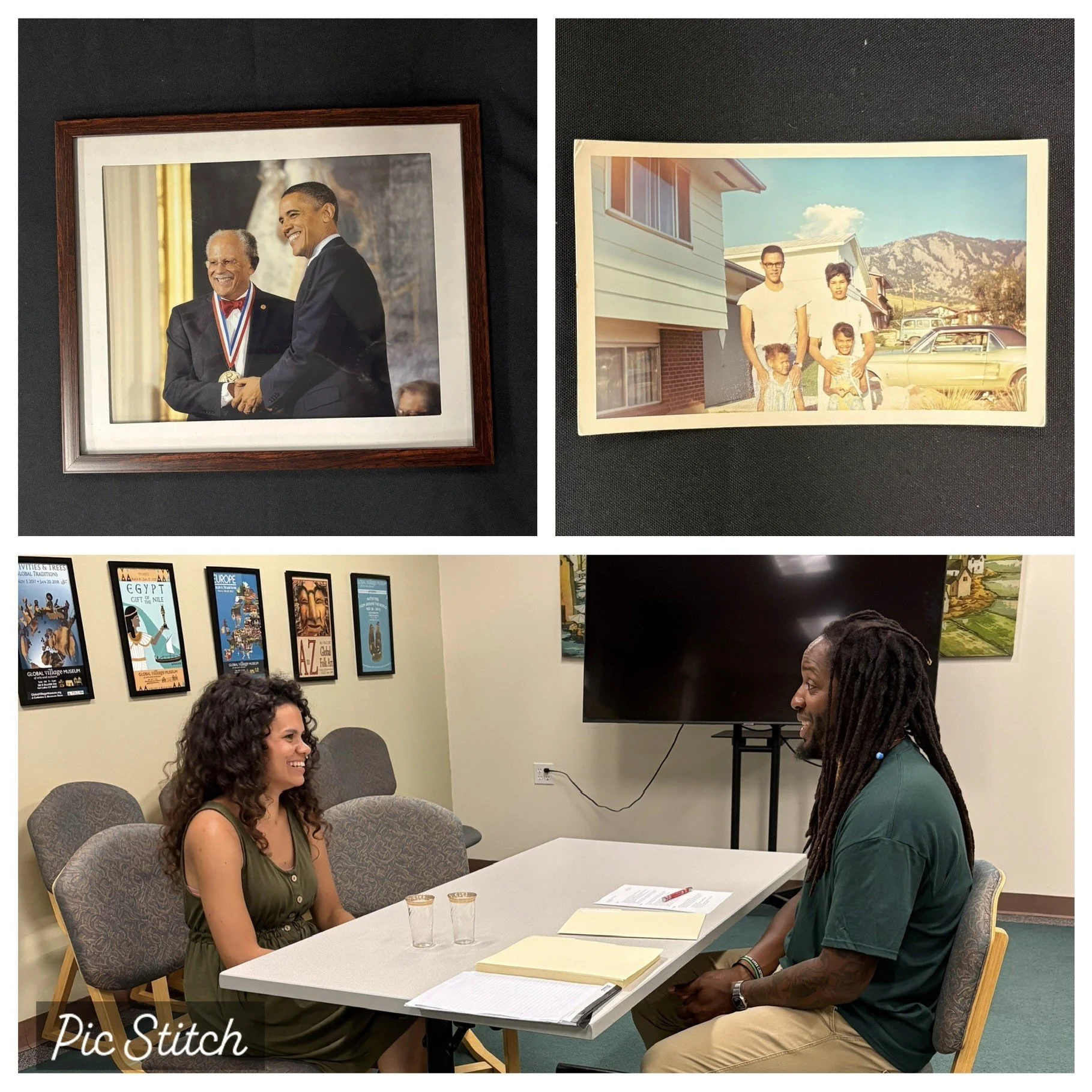
Dr. Pittman and members of the History Matters team recently hosted a History Harvest to honor local Black stories. A History Harvest is a community-based way to collect and understand our diverse and complex local histories. During the event, photos, objects, and oral histories are digitally preserved for students and the public at large to connect with and learn from. In partnership with the History Matters project, the Fort Collins Juneteenth Community Celebration, and the Global Village Museum of Arts and Cultures, this targeted event sought to bring in artifacts that honor Black history and celebrate Black stories, freedom, and futures.
Community Engaged Scholarship – Teaching, Learning, and Celebrating Juneteenth in Fort Collins, Colorado
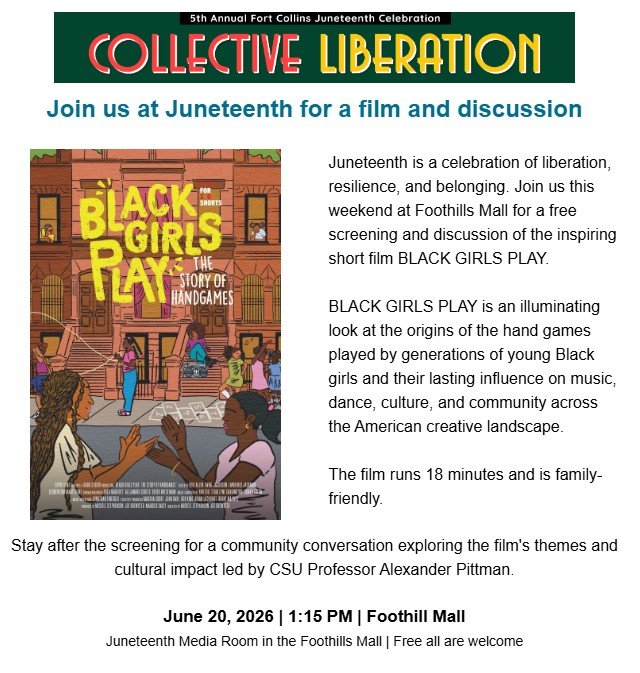
Juneteenth provides an opportunity for communities to gather in celebration through acts of joy, cultural expression, and collective remembrance. Equally important, however, is an examination of the historical context through which the Juneteenth tradition has evolved over more than 150 years. As both a cornerstone of Black history and an integral part of American history, Juneteenth invites critical reflection on the nation's ongoing pursuit of social justice and civic unity. Formally recognized as a federal holiday in 2021, the observance has origins and commemorative traditions that long predate this designation. In partnership with the City of Fort Collins and several community organizations, Dr. Pittman has led or collaborated on several public history initiatives that engage residents with the history and contemporary significance of Juneteenth, including public lectures, a historical community bicycle tour, a film screening and facilitated discussion, and a short public history documentary. This ongoing work underscores the importance of extending historical scholarship beyond the university classroom or textbooks and into the broader community. Dr. Pittman maintains that historians and educators have a responsibility to engage with the public in meaningful ways and emphasizes the need to produce scholarship that is both academically rigorous and accessible to diverse public audiences.